
Collaborative Robots
Smarter, Safer Automation for Modern Manufacturing
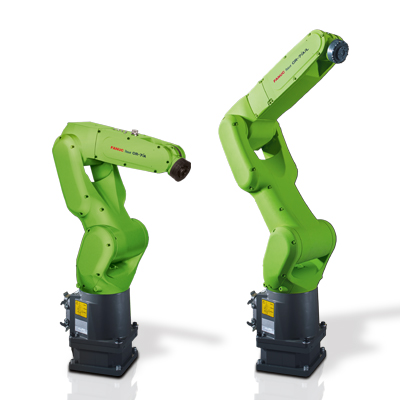
Co-Bots Designed to Work Alongside You
Collaborative robots — or co-bots — are changing how manufacturers think about automation. Unlike traditional industrial robots that require guarding and safety fencing, co-bots are engineered to safely share workspace with people. This makes them faster to deploy, easier to program, and more flexible for facilities looking to boost efficiency without major floor space or safety investments.
What Are Collaborative Robots?
Co-bots are lightweight, sensor-driven robots that can perform many of the same operations as standard six-axis robots — such as assembly, inspection, machine tending, palletizing, and testing — but with built-in safety features that detect contact, proximity, and force. Technologies like force feedback, capacitive sensing, and safety scanners allow co-bots to stop when they encounter resistance or when a person enters their workspace.
The Benefits of Co-Bots
- Safe to work around – No safety cages or light curtains required
- Faster installation – Deploy in days instead of weeks
- Lower upfront cost – Reduce guarding, programming, and integration expenses
- Quick payback – Operate 24/7 without overtime or fatigue
- Flexible redeployment – Move between workstations as production needs change
- Easy to program – Intuitive teaching interfaces minimize training time
Whether loading a CNC machine, packaging finished goods, or performing quality inspections, co-bots help manufacturers increase productivity, improve consistency, and lower operating costs.
When to Use Collaborative Robots
Collaborative robots are ideal for light- to medium-duty tasks such as:
- Machine tending
- Assembly assistance
- Packing and palletizing
- Quality inspection
However, because co-bots operate at reduced speeds to maintain safety, they’re not suited for every application. For high-speed, heavy-payload, or complex processes, traditional automation or hybrid systems may be a better fit.
The Bottom Line
Collaborative robots bridge the gap between manual labor and full automation — providing a safe, affordable, and scalable path toward smarter manufacturing. As technology advances, expect co-bots with higher payloads, faster speeds, and even greater integration into Industry 4.0 systems.
Capabilities
- Complex Mechanisms
- Data Tracking
- Dispensing Systems
- Dry Ice Blasting
- Heat Staking
- Hydraulic Systems
- Laser Marking
- Packaging
- Palletizing
- PC Control
- PLC Control
- Pneumatic Systems
- Press Systems
- Testing
- Tooling
- Torque Control
- Ultasonic Welding
- Vision Systems